Events
Join the SISWEC Training Experience
Are you a student, social worker, teacher, researcher, or manager looking to grow your skills in supporting social work through times of crisis? Then we invite you to take part in the SISWEC Training Experience; an opportunity to test new training content, engage in international exchange, and contribute to the future of social work education in Europe.
What is SISWEC?
SISWEC (Strengthening the Skills of Social Workers in a Europe in Crisis) is a European project led by a consortium of 8 partners from 7 countries. It aims to improve the capacity of social professionals to respond to today’s complex challenges through innovative training and collaboration.
What is SISWEC?
SISWEC (Strengthening the Skills of Social Workers in a Europe in Crisis) is a European project led by a consortium of 8 partners from 7 countries. It aims to improve the capacity of social professionals to respond to today’s complex challenges through innovative training and collaboration.
About the SISWEC Training Experience
As part of our SISWEC Training & Feedback Event, you are invited to:
The modules (available in English) cover:
Each module can be completed independently and at your own pace. For every completed module, you’ll receive a certificate. Complete all four to receive a SISWEC Course Certificate.
👉 Register to access the modules and take part in the online training:
https://forms.office.com/e/WZvVaExfYr
- Test our new training modules between 26 May and 8 June 2025
- Join the interactive online event from 11 to 13 June 2025 to discuss your experience and share feedback
The modules (available in English) cover:
- Module 1 – Dimensions of Crisis
- Module 2 – Anti-democratic Trends
- Module 3 – Mental Health in Uncertain Times
- Module 4 – Forced Immigration
Each module can be completed independently and at your own pace. For every completed module, you’ll receive a certificate. Complete all four to receive a SISWEC Course Certificate.
👉 Register to access the modules and take part in the online training:
https://forms.office.com/e/WZvVaExfYr
Project meetings
|
Kick of Meeting
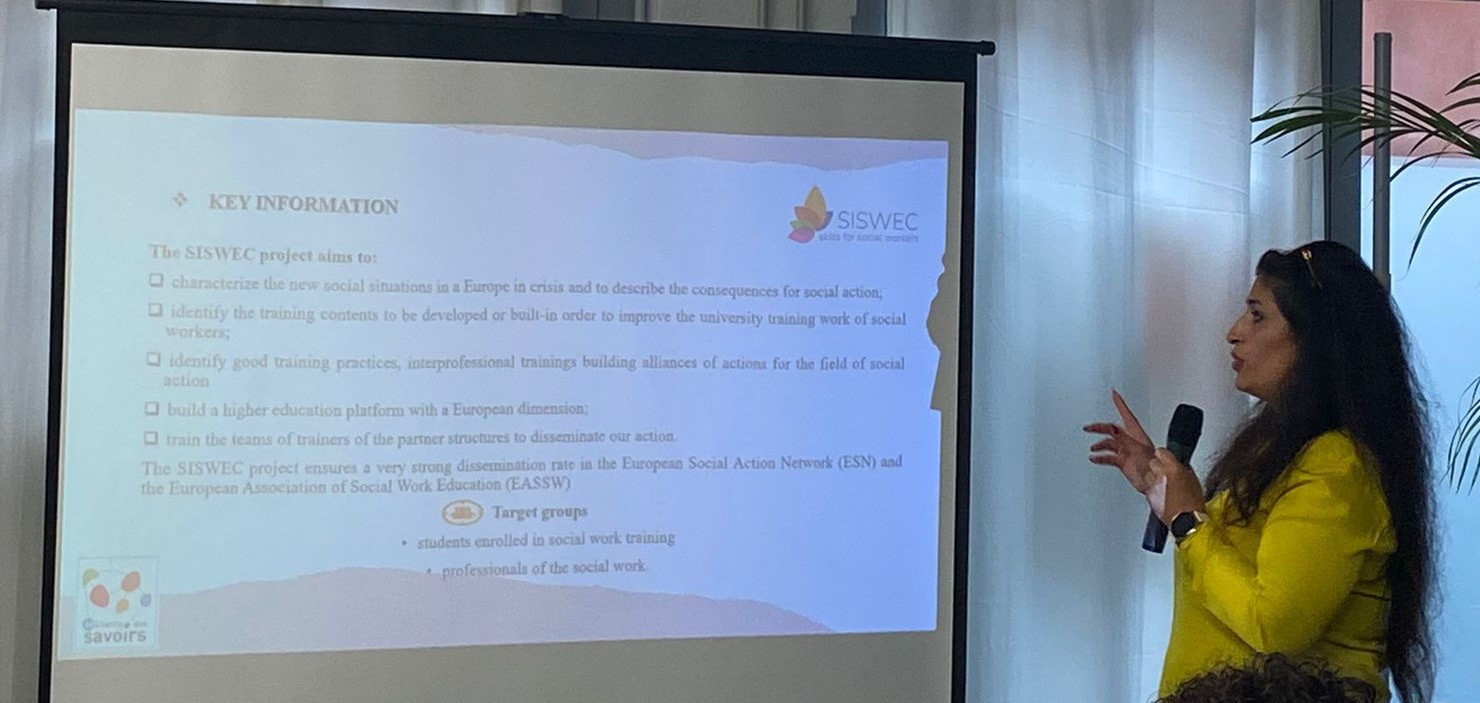
Militants des Savoirs - Toulouse 14/11/2022 ― 15/11/2022 The first meeting of the SISWEC Project was an opportunity for partners to meet each other. The coordinator, Militant des Savoirs, presented the project, the objetives, the WP and the expected results. Each WP was presented by the responsible partner and financial and administrative issues were also clarified. |
|
2nd Project Meeting
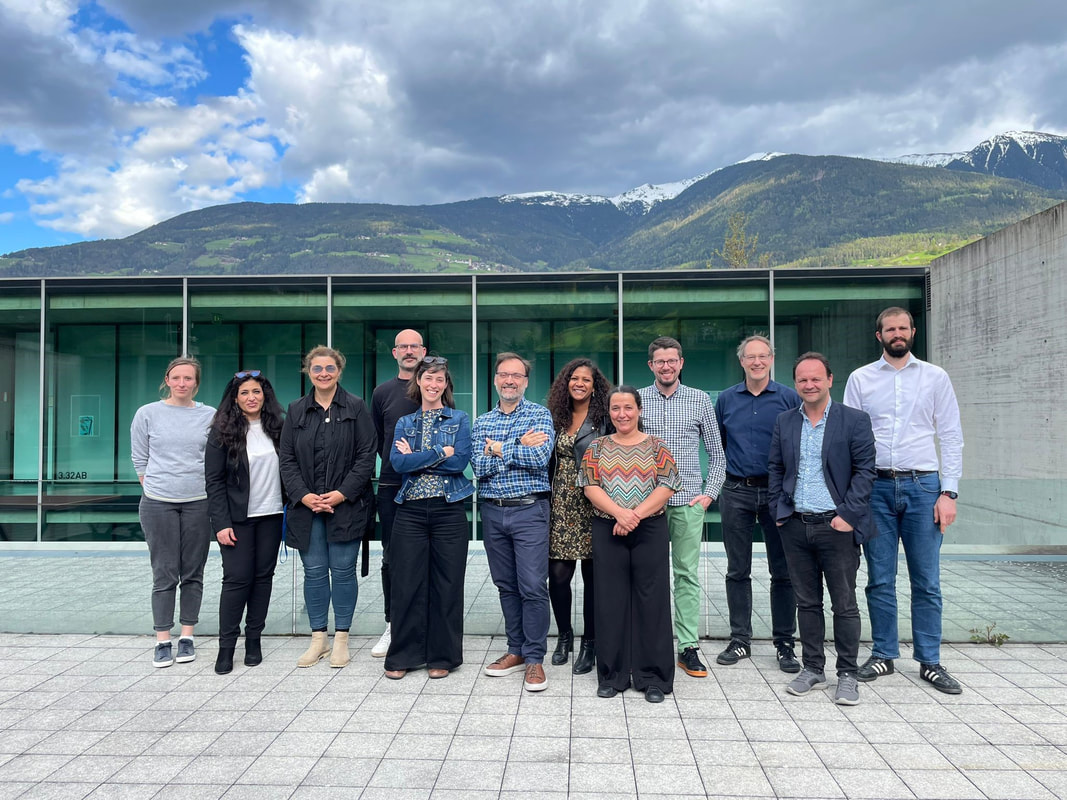
Libera Università di Bolzano - Bressanone-Brixen 03/05/2023 ― 04/05/2023 The second meeting was an opportunity to discuss the project's updates and progress. The WP2 is ongoing and the partner ESN provided some preliminary results. Additionally, the first intercategorial training of trainers was discussed. |
|
|
|
|
3rd Project Meeting
University of Nicosia - Nicosia, Cyprus 26/09/2024 ― 27/09/2024 The third meeting was an opportunity to discuss the project's updates and progress. As WP2 and WP3 were concluded, along with Intercategorial training the trainer sessions in Toulouse (2023) and Warsaw (2024), it was time to think about the development of WP4 training modules, reflecting the findings of previous WP and about the last Training of trainers session, to be held online. |
Intercategorial Training of Trainers Seminars
|
Offline
Training of trainers session 1 - Toulouse 02/10/2023 ― 05/10/2023 Rise of Precarity and Social Work in Europe This training session was held at IFRASS, and was dedicated to the theme Rise of Precarity and Social Work in Europe and gathered almost 50 trainees, who were social workers, teachers, students and volunteers. The first day opened with the presentation of the participants and the SISWEC project. Then, Michael Lubemba and Zoé Carvard presented the session Social Work and the Rise of Precarity in France - Case Study of the "SIAO" in Toulouse. In the afternoon, Dr. Nawel Harouchi gave an overview of Children and Families in Precarity with a Focus on Migrant People. The last session was dedicated to Health Promotion with Refugees, presented by Dr. Doris Rosenlechner-Urbanek and Dr. Heiko Berner. On the second day, Rasha Nagem presented the session Precarity and Violent Extremism and after there was a session where participants could share their stories regarding people experiencing precarity. In the afternoon, Christos Panagiotopoulos presented a study Precarity, School Drop Out and Youth Situation. This day ended with an immersive exhibition Lisa: A Story In Which You are the Migrant, invited the participants to go through a story of a migrant with many possible ends |
The third day began with the presentation of the preliminary results of the WP2. In the afternoon, a workshop took place, where participants were invited to interpret a set of pictures - Workshop Photo Language - Housing Precarity and Gender Issues. Finally, the last session displayed the film "Sorry, we missed you", about Job Precarity, which was followed by a debate moderated by Aurélie Toural and Sabahadin Bakari. |
|
Offline
Training of trainers session 2 - Warsaw, Poland 14-16 May 2024 Forced migration, refugees, human rights and social work This training session was held at Centrum Konferencyjne Zielna (14/5) and at Fundacja Batorego (15-16/5), was dedicated to the theme Forced migration, refugees, human rights and social work and gathered almost 50 trainees - social workers, teachers, students and volunteers. The first day opened with the presentation of the participants and the SISWEC project. Then, there was a presentation by Sarian Jarosz (Migration Consortium) and Katarzyna Słubik (Legal Intervention Association) and discussion panel, moderated by Anna Dolińska (IPA Poland) - Dealing With Forced Migration - Introduction to Polish Experience. In the afternoon, Ada Tymińska (Polish Helsinki Foundation for HRs) and Mrs. Stefani Violari (senior social worker at Reception Center ''Pournara'') presented Forced Migrants' Reception on EU Boarders. Human Rights Issues and Social Work. The last session was dedicated to (Anti-)Racism in social work with forced migrants, presented by Karim Hufnagl (FH Salzburg). On the second day, Paulina Berczyńska (WCPR), presented the session Organizing Institutional Support for Forced Migrants Social work institutions' and local governments' perspective. The following session was presented by Jorge Ferreira (ISCTE, Portugal), Berta Granja and Madalena Oliveira (ISSS, Portugal) and focused on Supporting Employment and Entrepreneurship of Forced Migrants Online
Training Feedback Webinar 11-13 June 2025 Assessing SISWEC training modules The 3 online sessions were an opportunity for those who participated in the SISWEC training experience, completing one or modules, made available, free and online to reflect on learning, to exchange with peers and experts across Europe, and to share their feedback to help improve the training content, and also contribute to the future of social work education. The first day was dedicated to the assessment of Module 1 - Dimensions of Crisis and Module 2 - Anti democratic trends. After a presentation of an overview of the modules (objectives, learning results, length and contents), participants were placed on breakout rooms and given a link to assess the 2 modules. Both were assessed very positively. These modules also received a very positive evaluation. The second day focused on the assessment of Module 3 - Social Health in uncertain times and Module 4 - Forced Migration, and followed the same methodology of the first day, placing participants in breakout rooms. |
In the afternoon, Patrycja Kownacka (University of Białystok) presented Refugees and Education - Best Practices Presentation and Workshop. This day ended with the session Cultural Competence and Sensitivity, presented by Christos Panagiotopoulos (University of Nicosia). The third day began with the presentation How to Work with Young Refugees. The Experience of REFUGIN Project, presented by Rasha Nagem & Dima Hanna (MDSFrance). The following session was moderated by Filip Pazderski (IPA, Poland) and summarised the lessons learnt over this training. In the afternoon, there were study visits to Dom Ukraiński, providing complex support for the Ukrainian war refugees in Poland and the Museum of the Polish Jews. On the third day, the SISWEC best practices cards were presented, detailing best practices on issues such as the Ukraine-Russia war, Covid 19 and Mental Health. Participants were invited to share best practices from their countries. There was also a debate on the effective preparedness of students and practicioners to address the current crisis and main challenges to implement crisis related content. As many students were present, it was possible to have live testimonials of how teaching is performed in different countries.
|
SISWEC webinar
📅 Date: 27 March 2025
⏰ Time: 10:00 – 12:00 CET
📍 Format: Online (Zoom)
Objectives
🔎 Provided participants with:
✅ A deeper understanding of legal and institutional frameworks in crisis response
✅ Interdisciplinary approaches to addressing complex social challenges
✅ Ethical guidance for high-stakes decision-making
✅ Practical intervention strategies to support at-risk populations
This event was designed for social workers, academics, policymakers, students, NGOs, public authorities, and social service professionals—anyone committed to bridging academic expertise and real-world action.
⏰ Time: 10:00 – 12:00 CET
📍 Format: Online (Zoom)
Objectives
- How can we better equip social workers to respond to today’s complex crises?
- From forced migration to growing inequalities, social workers are on the frontlines, providing essential support to vulnerable communities. As these challenges evolve, so must our strategies and skills.
- Join us for this SISWEC Project Webinar (where leading experts will share insights, tools, and best practices to help professionals navigate crisis situations effectively.
🔎 Provided participants with:
✅ A deeper understanding of legal and institutional frameworks in crisis response
✅ Interdisciplinary approaches to addressing complex social challenges
✅ Ethical guidance for high-stakes decision-making
✅ Practical intervention strategies to support at-risk populations
This event was designed for social workers, academics, policymakers, students, NGOs, public authorities, and social service professionals—anyone committed to bridging academic expertise and real-world action.
SISWEC Final Conference
Shaping the Future of Social Work in Crisis
|
🗓️ Date: 1 July 2025 🕤 Time: 09:30 – 13:00 CET 📍 Format: Hybrid – Brussels & Online Across Europe, social workers are on the front lines of intersecting crises—from forced migration to growing inequalities. Over three years, the SISWEC project (Strengthening the Skills of Social Workers in a Europe in Crisis) has worked to enhance training and equip professionals with the tools needed to respond to today’s complex challenges. 🚀 In the SISWEC Final Conference, the project’s key findings, tools, and innovations were presented, the European Online Training Platform was officially launched, best practices in social work education were presented, and dialogue among educators, practitioners, and policymakers across Europe was fostered. 🎯 Social workers, educators, students, researchers, public authorities, NGOs, attended our hybrid event. |
|
The presentation on Collective crisis: a challenge for social work education? was provided by Maria Chiara Pedroni (UNIBZ) and Markus Pausch (USALZBURG) who debated on:
On the panel New Tools for Learning: Online Training and Trainer Support in Social Work, the
The last panel focused on What’s Next for Social Work Education in Europe? and discussed
Moderated by Christos Panagiotopoulos (University of Nicosia), and the participation of Aurélie Tourail (IFRASS) and Richard Ingram, Professor of Social Work, University of Dundee, Scotland. |
Discussions were around Social Services in Times of Crisis, regarding
Finally, Rasha Nagem (MDS) presented the
and closed the Conference. |
SISWEC at the European Roundtable 2023 in Brussels
Building a Resilient Social Services Workforce
|
The European Roundtable 2023 organised by ESN brought together 31 participants from across the EU to discuss the challenges facing the social services workforce.
Dr. Rasha Nagem, project coordinator from Les Militants des Savoirs (MDS), presented the SISWEC project, sharing key insights with EU and national policymakers |
SISWEC at the European Conference on Social Work Education (ECSWE) – Oporto, Portugal, 2023
|
At the ECSWE 2023 in Porto, Dr. Rasha Nagem (Les Militants des Savoirs) and Prof. Christos Panagiotopoulos (University of Nicosia, President of the European Association of Schools of Social Work) presented the SISWEC project, highlighting its objectives and preliminary results to an audience of academics and practitioners.
|
SISWEC at the International Capacity-Building Workshop
New Delhi, India, January 16, 2025
|
During the International Capacity-Building Workshop held in New Delhi, Prof. Christos Panagiotopoulos (University of Nicosia, President of the European Association of Schools of Social Work) presented the SISWEC project.
His intervention highlighted the project’s findings on how European social work degree programmes integrate crisis-related content and best practices in crisis education. The presentation also explored how social work education can prepare professionals to address collective crises and adapt to emerging challenges in the field. |
European Social Services Conference – Aarhus, June 23–25, 2025
|
The European Social Network (ESN) presented the SISWEC project at the European Social Services Conference (ESSC) in Aarhus, which gathered nearly 700 delegates from across Europe.
During the Walking Practice Fair, ESN showcased the project’s results and shared dissemination materials with participants |
SISWEC at the European Conference on Social Work Education – Salzburg, June 23–26, 2025
|
At the European Conference on Social Work Education (ECSWE) in Salzburg, SISWEC partners – Prof. Christos Panagiotopoulos (University of Nicosia), Prof. Markus Pausch (Salzburg University of Applied Sciences), Prof. Urban Nothdurfter (Free University of Bolzano), and Dr. Rasha Nagem (Les Militants des Savoirs) – organised and contributed to a symposium presenting the project’s results. The session linked the SISWEC findings to the conference theme, emphasizing the interconnection between different crises and the importance of bridging social work education and practice in Europe. A workshop titled “Connecting Practitioners, Students and Educators through Enhancing Crisis Intervention Skills in European Social Work Education (SISWEC): Presenting an Online Training Tool” was also conducted by the partners, showcasing the project’s innovative learning resources.
|